IRS notices, in plain words
The IRS letter decoder
IRS notices arrive in a set order, and the code in the top right corner tells you exactly where you stand. Here is the whole ladder, what each rung actually allows the IRS to do, and the deadline attached to it.
The ladder, in order
The IRS does not improvise. Balances move through the same sequence of notices, and the code in the top right corner of the page tells you exactly which rung you are standing on. Each one carries its own deadline, and each one has a different set of options still open to you.
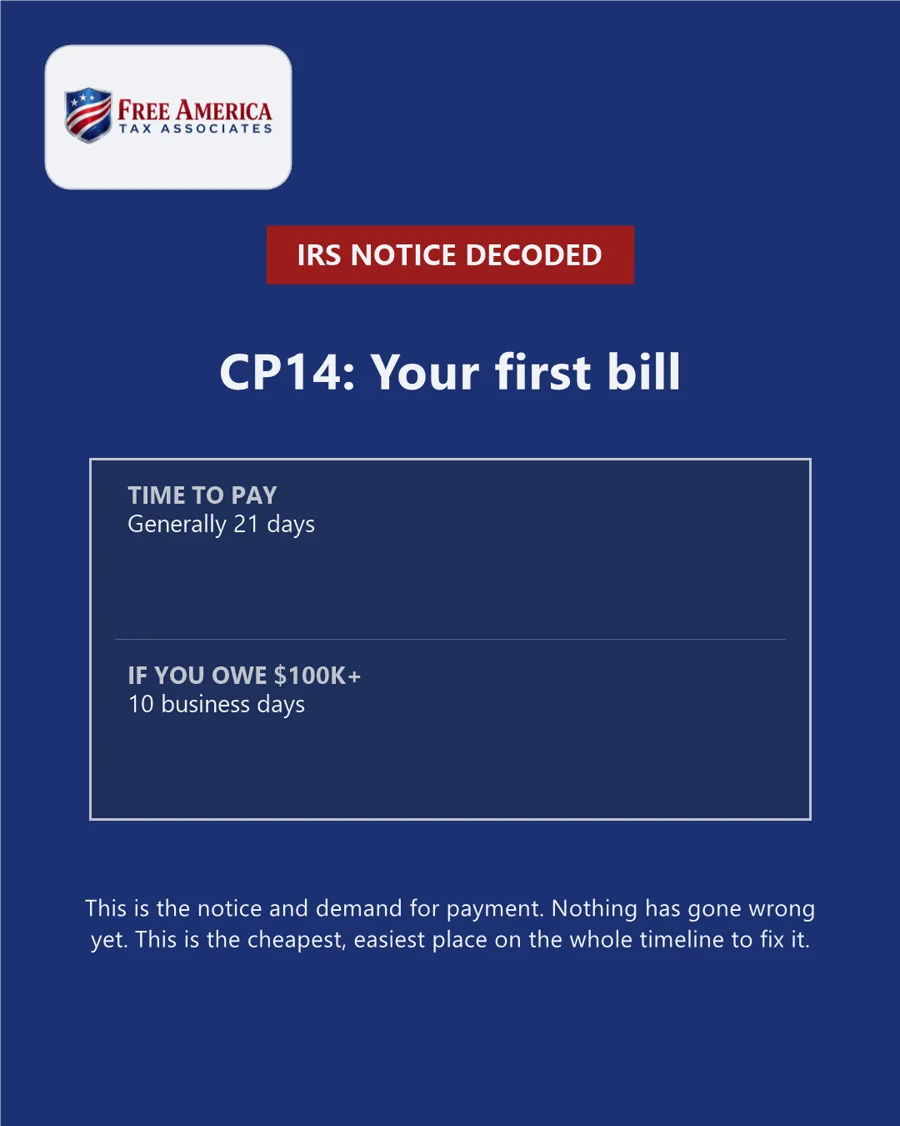
Your first bill
The IRS says you have a balance due. Nothing has been enforced. This is the cheapest possible moment to deal with it, because penalties and interest are still small. More on the CP14.
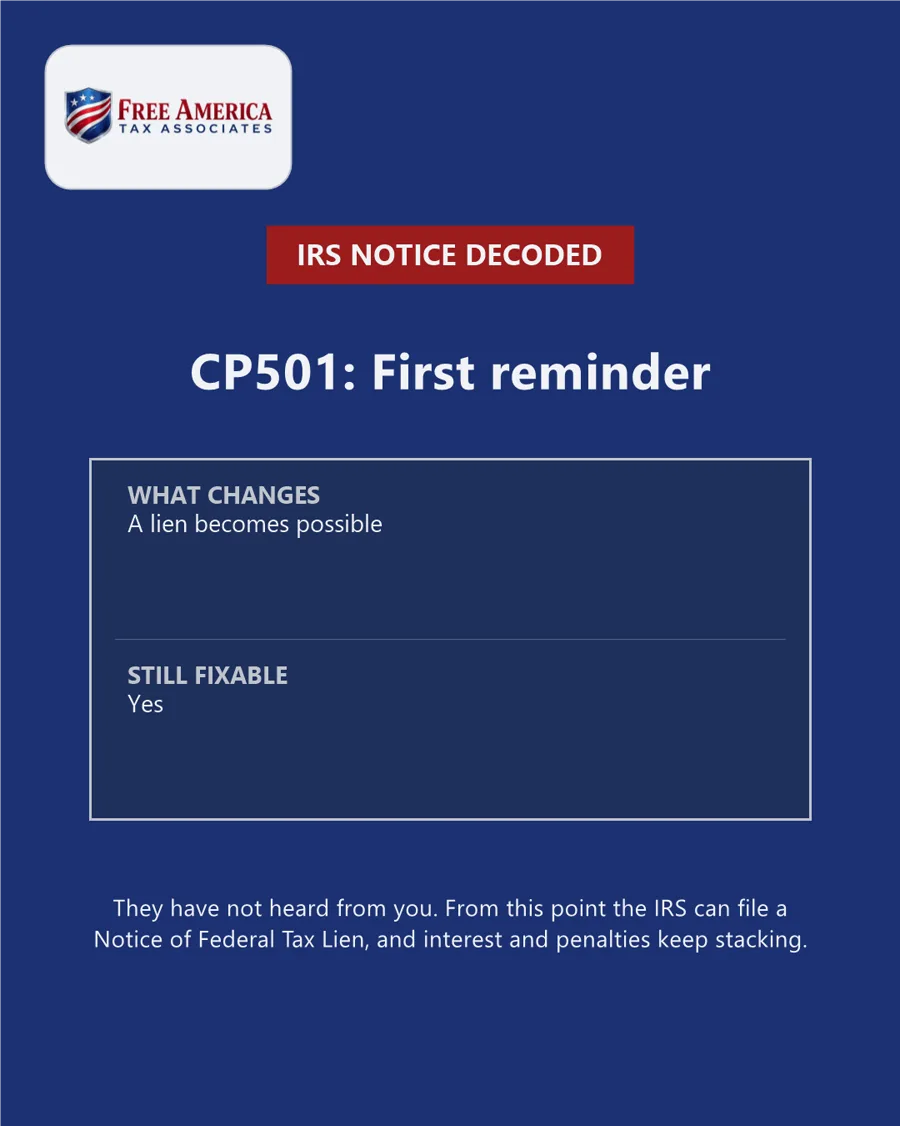
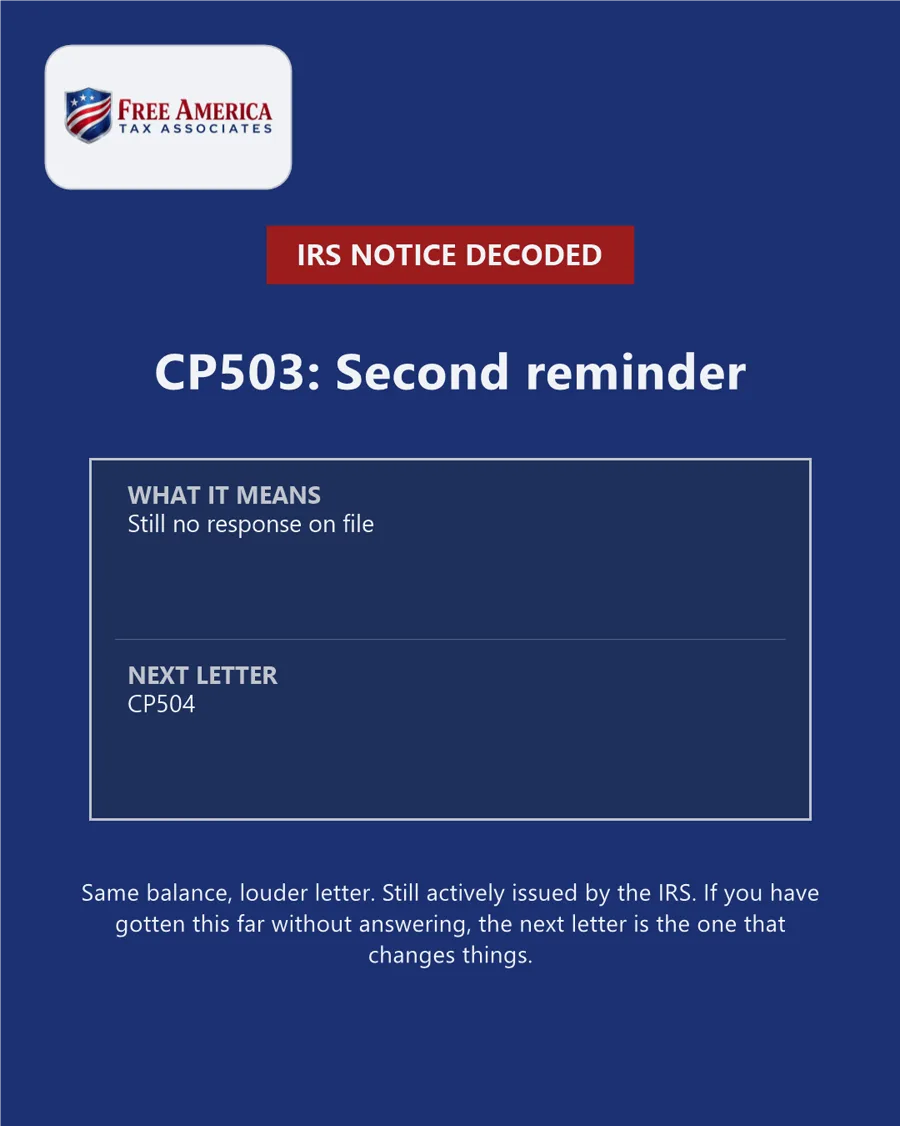
Reminders, getting firmer
Same balance, more urgency in the wording. Still no enforcement. Options are all still on the table, and the balance is still growing quietly underneath.
Notice of Intent to Levy
This one reads like the end, and it is not, but do not file it away. Thirty days after this notice the IRS can take your state tax refund, and that particular action does not come with a pre-levy hearing right. Your wages and bank accounts usually require one more notice first. More on the CP504.
Final Notice of Intent to Levy, and your right to a hearing
This is the one that can reach a paycheck or a bank account. It also starts a 30-day clock, measured from when you receive it, to request a Collection Due Process hearing on Form 12153. That request is a genuine right, and the deadline is real.
Notice of Federal Tax Lien filing
A separate track with its own 30-day hearing window. A lien is a public claim against your property, not a seizure. More on liens.
A payment plan is about to be terminated
Sent when an installment agreement has gone into default, which can happen from a missed payment or from filing a later return late. How plans work.
The decoder, one card at a time
Swipe or drag through the cards. This is the version we post on Instagram, saved here so you can pull it up whenever the mail arrives.
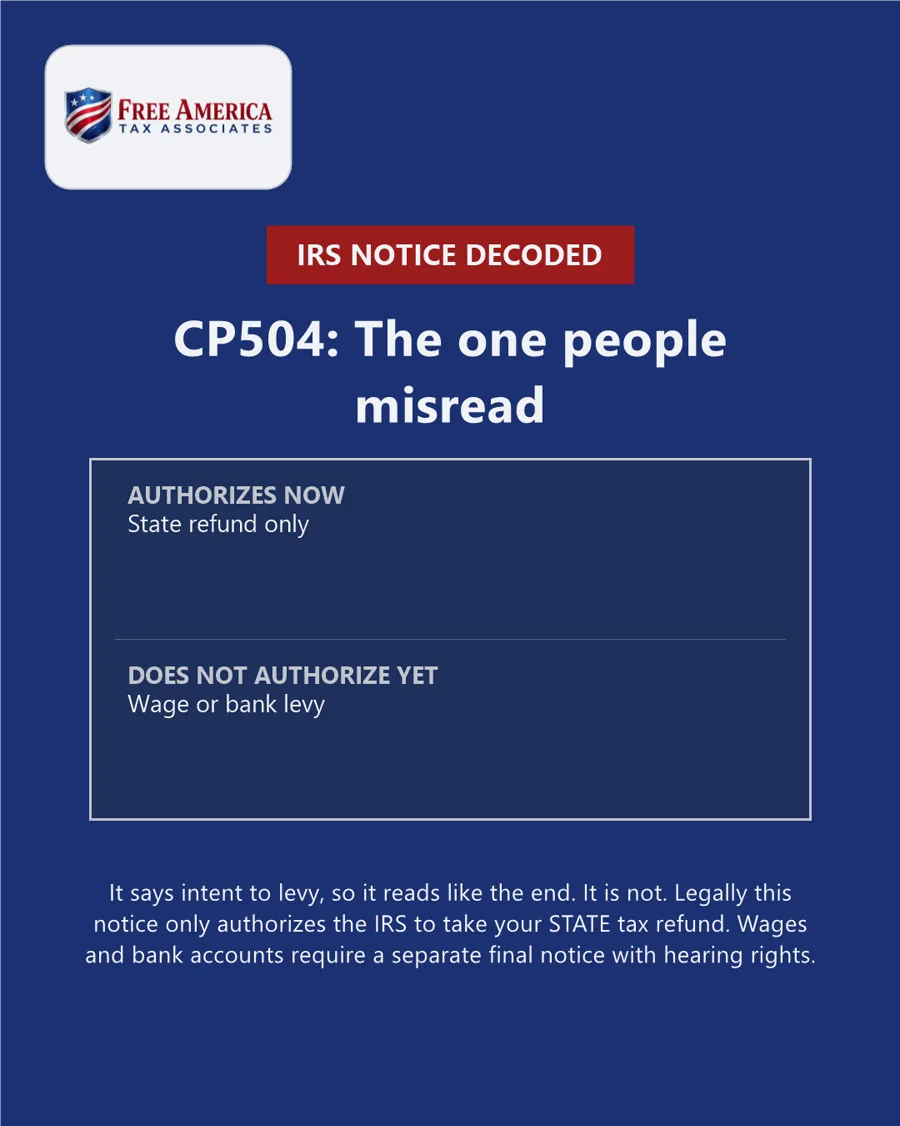
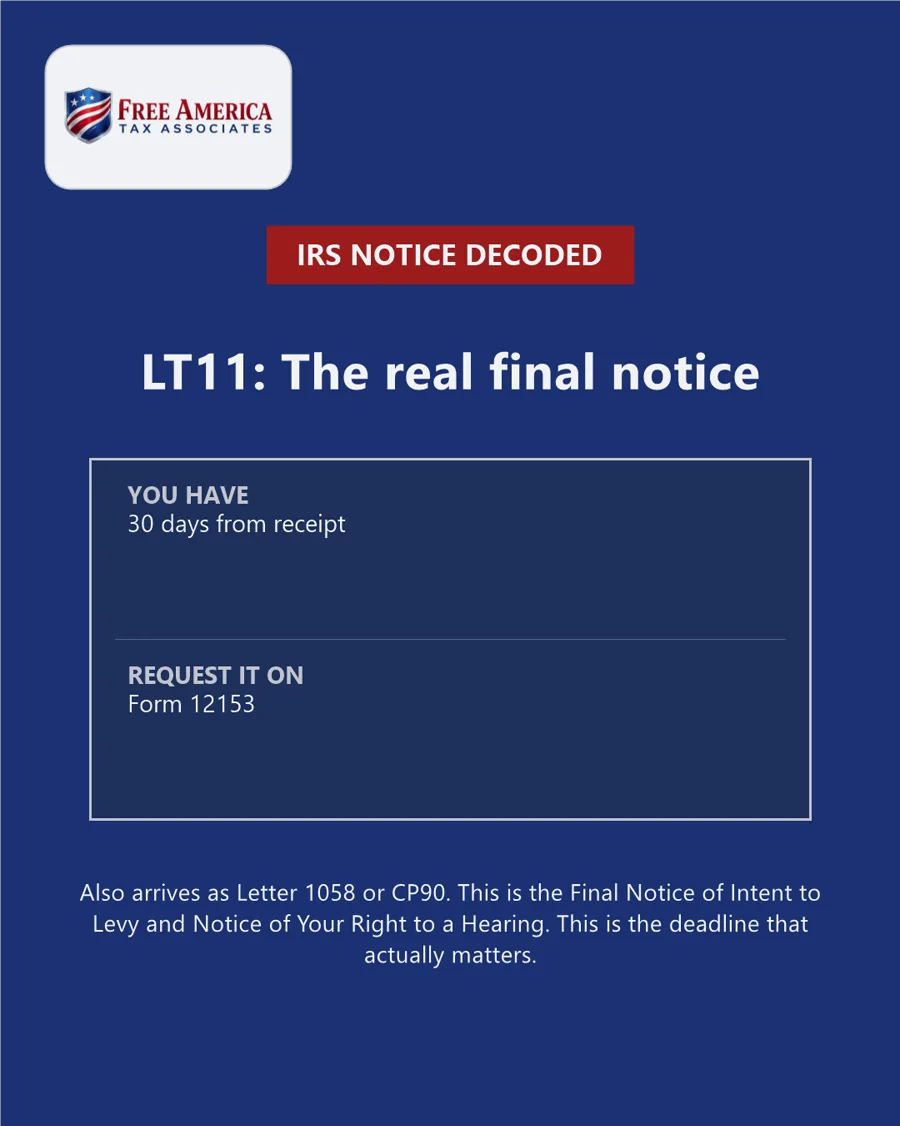
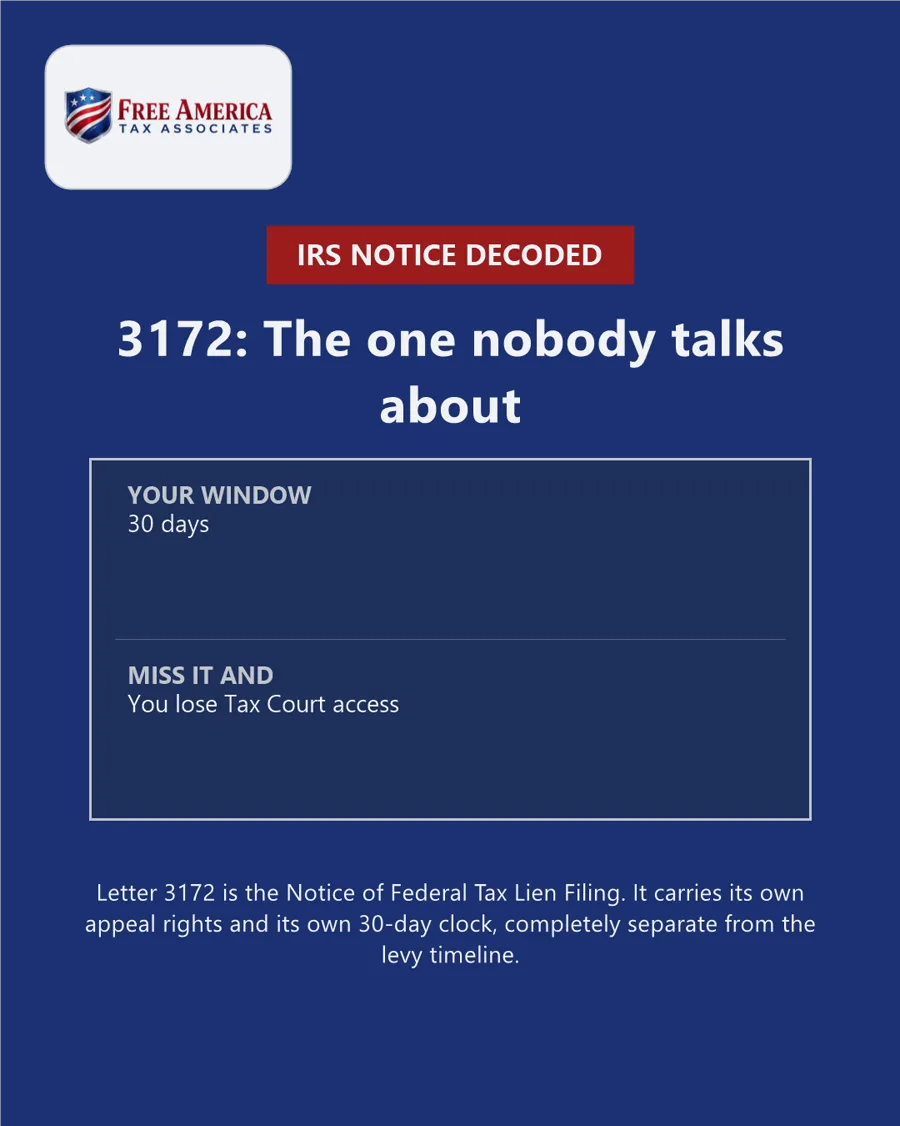
The two letters people read wrong
A CP504 gets treated as the end of the road when it is not, and a CP2000 gets treated as a bill when it is a proposal you are allowed to argue with. Both mistakes are expensive in opposite directions.
If it has already reached your paycheck
A wage levy takes a piece of every cheque until something changes it. The IRS's own rules describe situations in which a levy must be released, and an approved payment plan is one of the routes there.
Read next: wage garnishment release, bank levy release, or how payment plans are built.
If a levy is already running, the useful move is the fast one. Bring the notice to a call and we will tell you which release route fits.
What the waiting costs
While a balance sits there, two separate meters run. The failure-to-pay penalty is 0.5% of the unpaid tax for each month or part of a month, up to 25%. Interest runs on top of it and compounds daily. The rate on individual underpayments is currently 7%.
Two numbers are worth knowing, because they move in opposite directions. If you are on an approved payment plan and you filed that return on time, the penalty rate drops to 0.25% a month. If a final notice goes out and the balance is still unpaid ten days later, the rate goes up to 1% a month.
So the same balance can be accruing at a quarter of a percent or at a full percent, depending entirely on which paperwork is on file. The payment-plan maths in full.
Common Questions
Which IRS letter is the serious one?
Does a CP504 mean the IRS is about to take my wages?
How long do I have to respond to an LT11?
Is a CP2000 a bill?
What is a CP523?
Still not sure where you stand?
Fifteen minutes, no cost, and you leave with your next steps in writing.
Book My Free Call →Or call (855) 473-2829