Installment agreements, explained
How IRS payment plans are really built
A payment plan is not one thing. It is several different arrangements with different rules, and the one you end up in decides what you pay every month for years. Here is how the monthly number actually gets set.
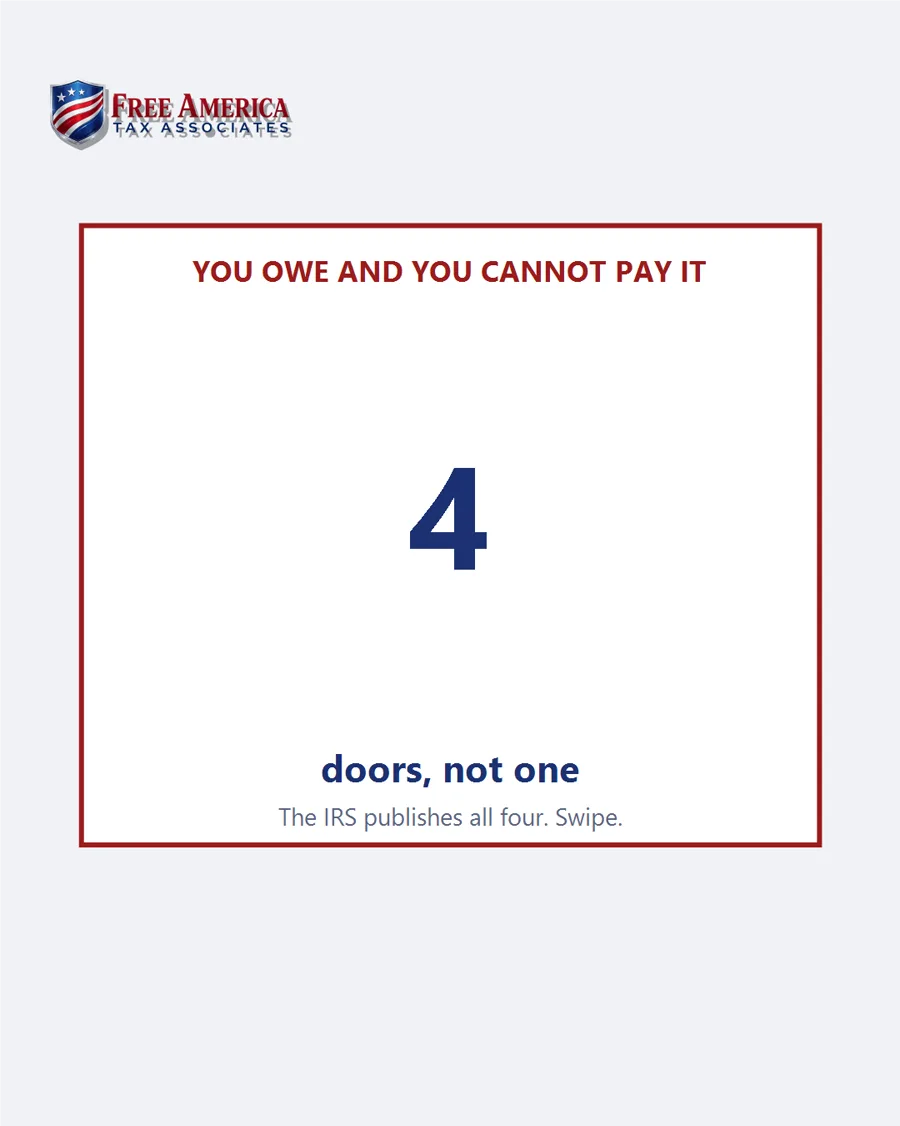
Four doors, and the IRS publishes all of them
There is no secret programme. There is a short list of arrangements the IRS already offers, and the work is in knowing which one fits your numbers and getting the paperwork right the first time.
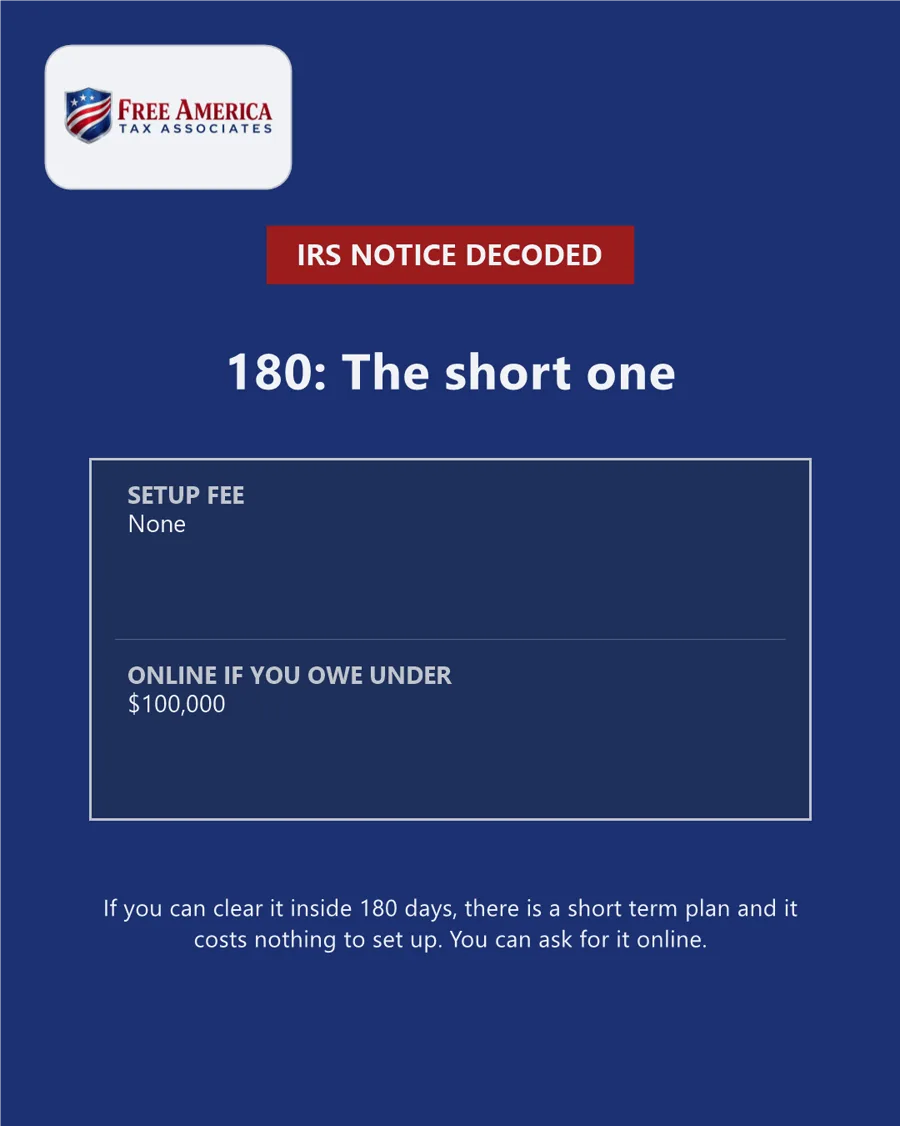
Short-term plan
Up to 180 days, with no setup fee. Available to request online if you owe less than $100,000 in combined tax, penalties and interest. Useful when the money is coming, just not this week.
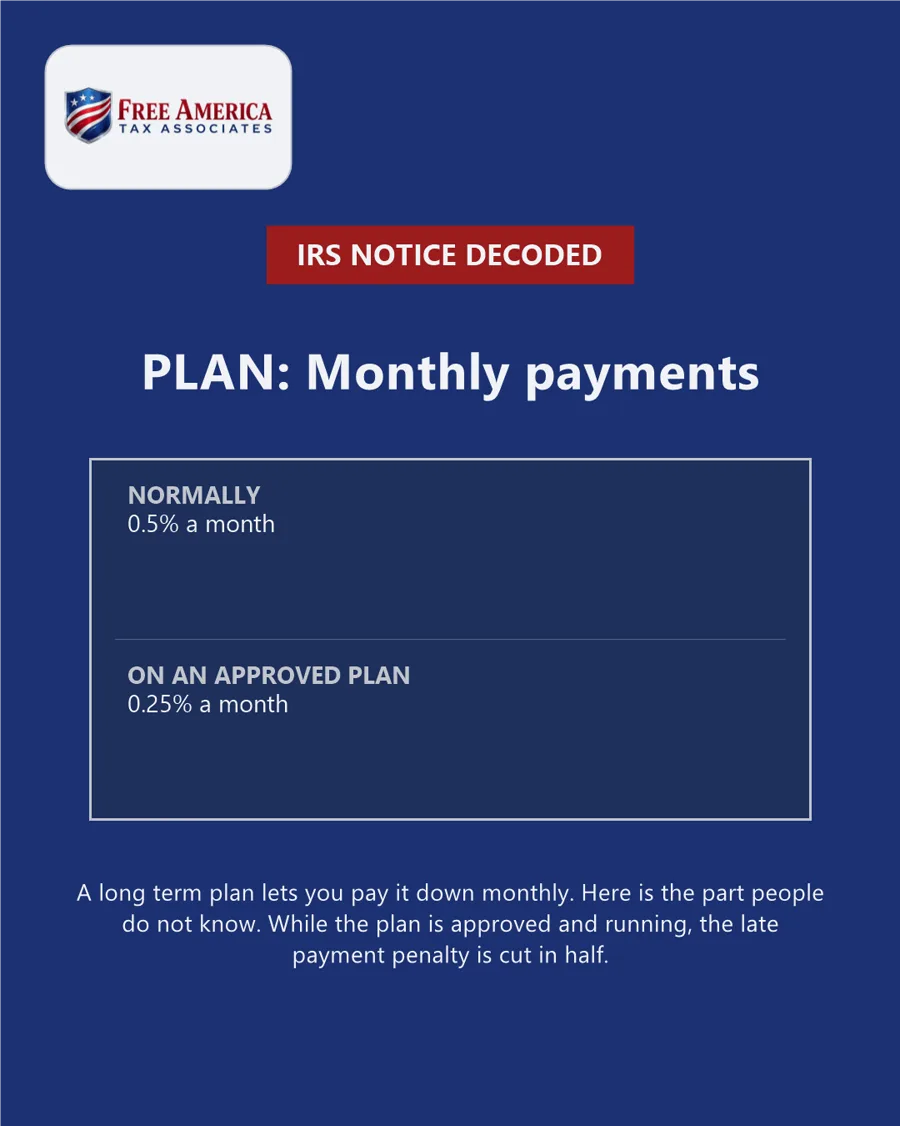
Long-term installment agreement
Monthly payments over years rather than months. This is the one that also cuts the failure-to-pay penalty rate in half while the plan is approved and running, provided the return was filed on time.
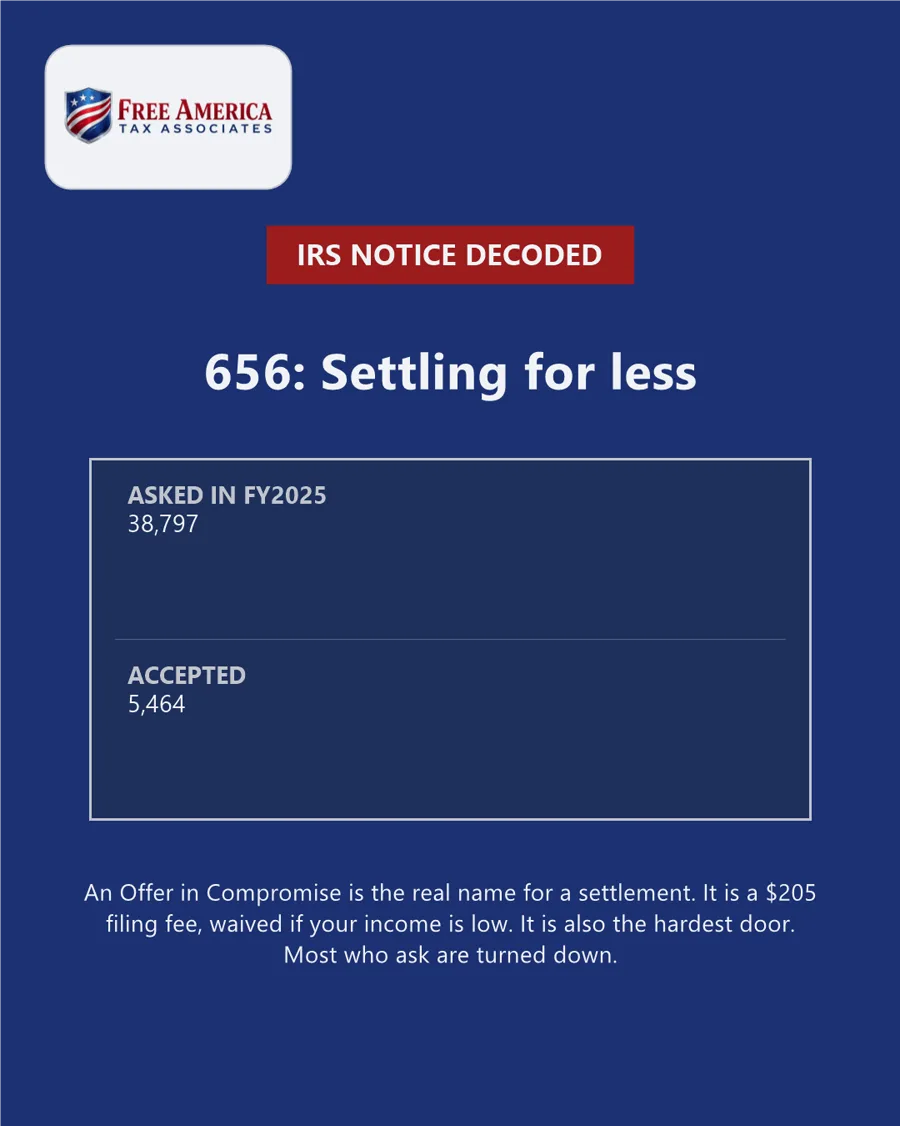
Offer in Compromise
The real name for a settlement, and the hardest door to get through. In fiscal year 2025 the IRS received 38,797 offers and accepted 5,464. How an offer is evaluated.
Currently Not Collectible
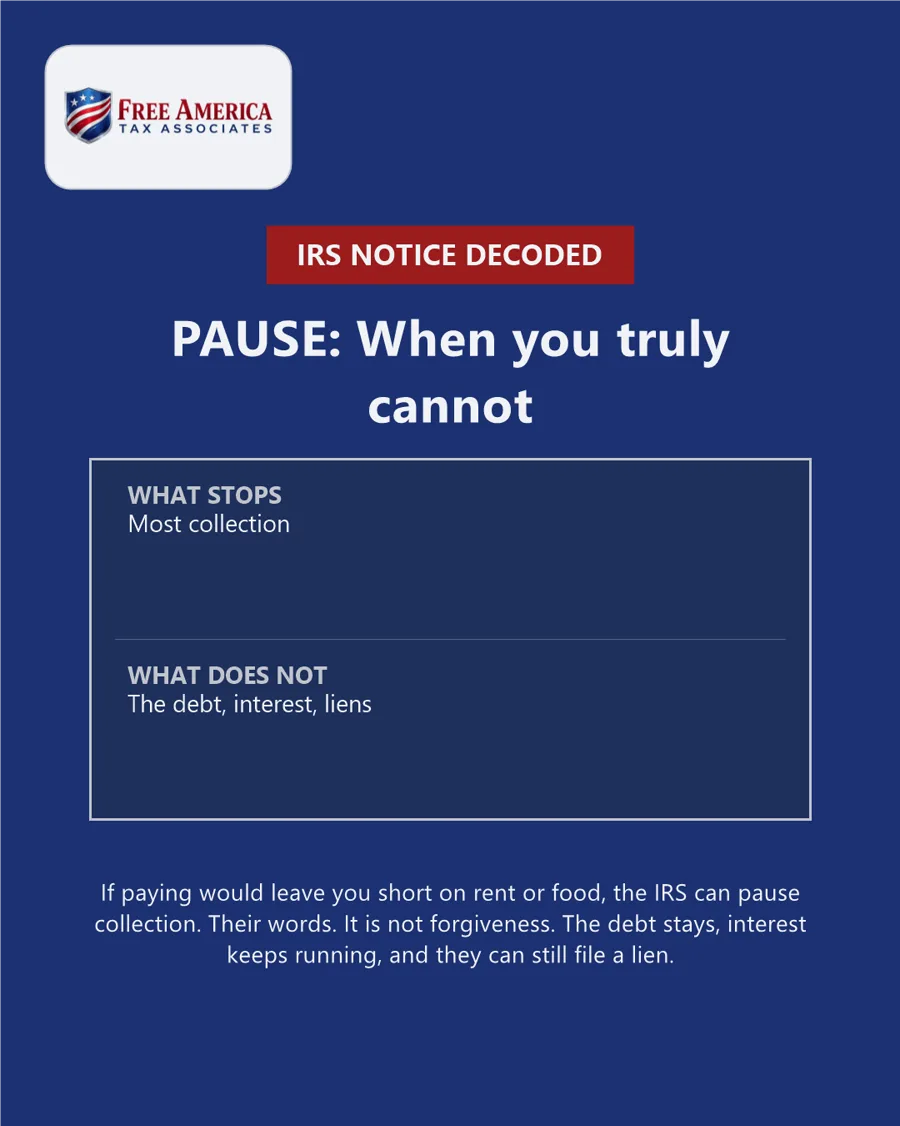
If paying would leave you unable to cover basic living costs, collection can be paused. It is a pause and not forgiveness: the balance stays, interest keeps running, and a lien can still be filed. More on hardship status.
How the monthly number actually gets set
A long-term installment agreement is not one thing either. It comes in three versions, and which one you land in depends on the size of the balance and on whether the IRS wants to see your finances. This is the part almost nobody explains, and it decides what you pay every month for years.
Version one
The one the computer approves
At $25,000 or less, the IRS generally does not ask to see your household finances. Between $25,001 and $50,000, the same applies as long as you pay by direct debit or payroll deduction. The proposed payment has to clear the assessed balance within 72 months, or by the date the collection statute expires, whichever comes first.
Version two
The one with a financial review
Above those thresholds, or when the computed payment is more than you can manage, the IRS asks for a collection information statement: income, housing, transport, living costs. It then applies its own standards to decide what it considers affordable. That figure and the figure you had in mind are frequently not the same, and how the statement is prepared is what moves it.
Version three
The partial-pay plan
Same financial review. The difference is the arithmetic: if what you can genuinely afford will not clear the balance before the collection statute runs out, the payments are set at what you can afford and the remainder can expire with the statute. It is a real, published arrangement, and it is periodically reviewed.
The part that catches people out. A plan can be terminated for missing payments, and also for filing a later return late, even if every payment was made on time. The notice that announces it is a CP523. Staying filed is part of staying on the plan.
Penalties come off. Interest almost never does.
The failure-to-pay penalty runs at 0.5% of the unpaid tax per month, to a maximum of 25%. On an approved plan, with the return filed on time, that rate halves to 0.25%. Ten days after a final notice to levy goes unpaid, it doubles to 1%.
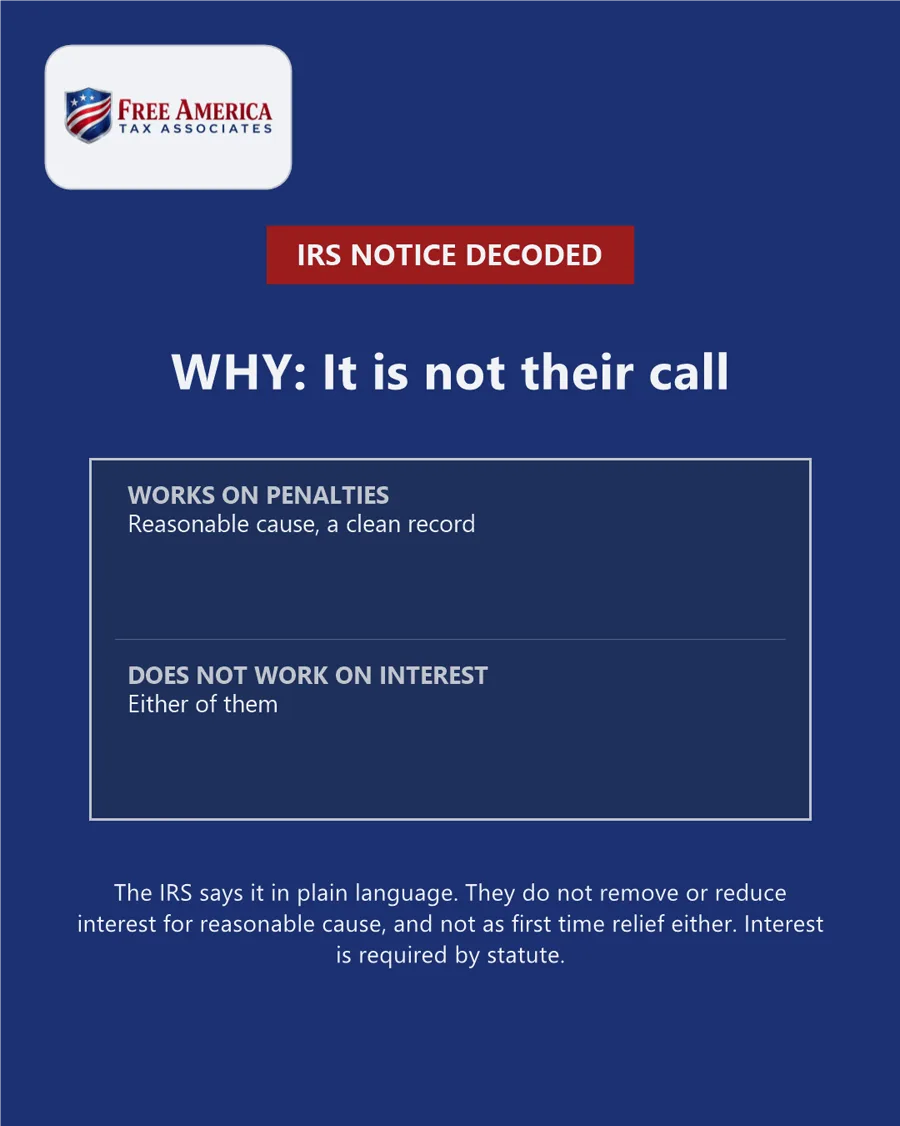
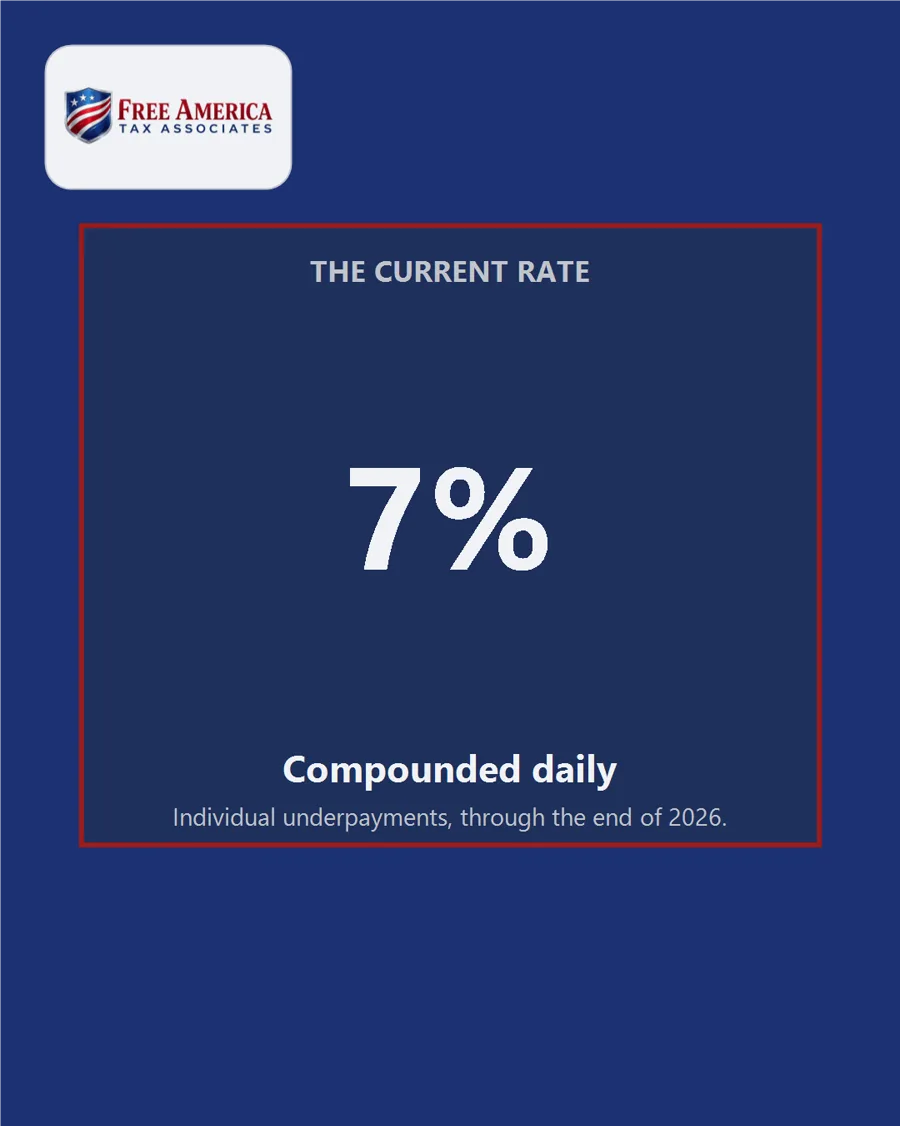
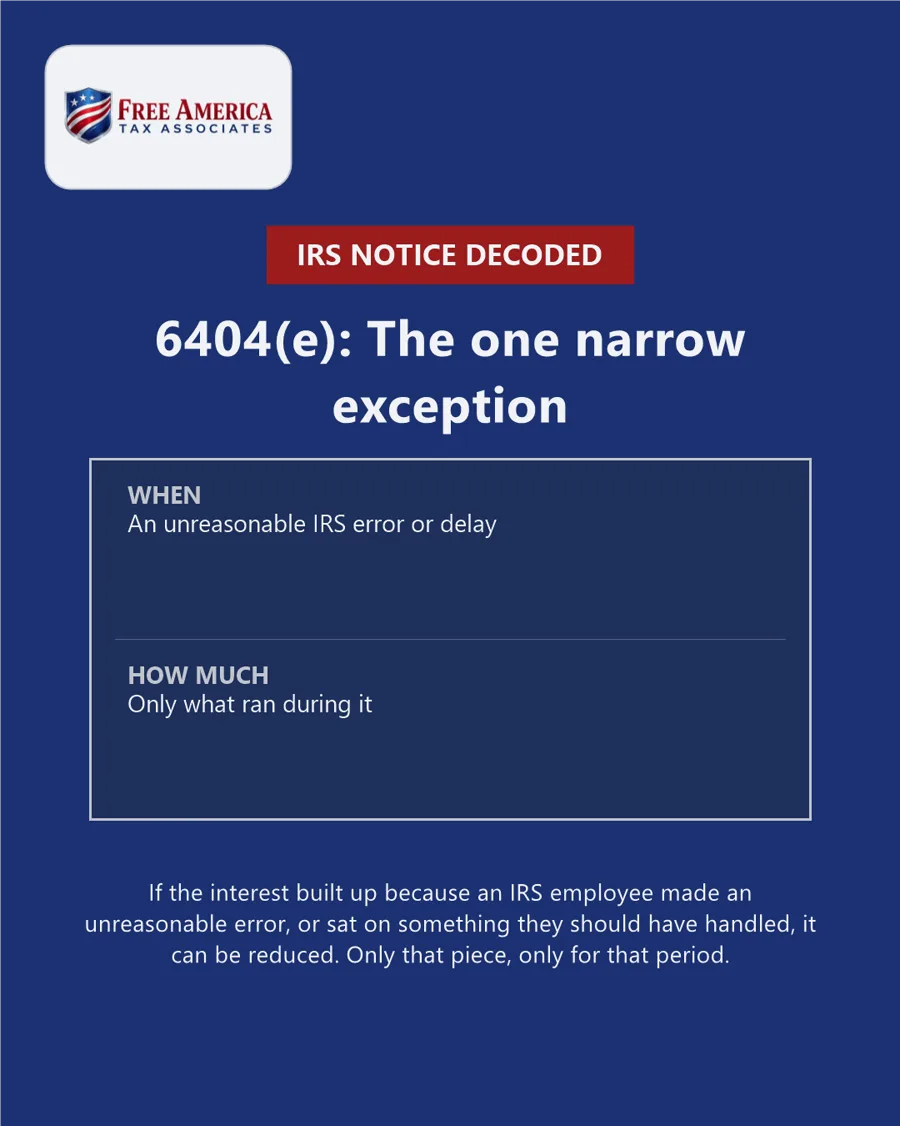
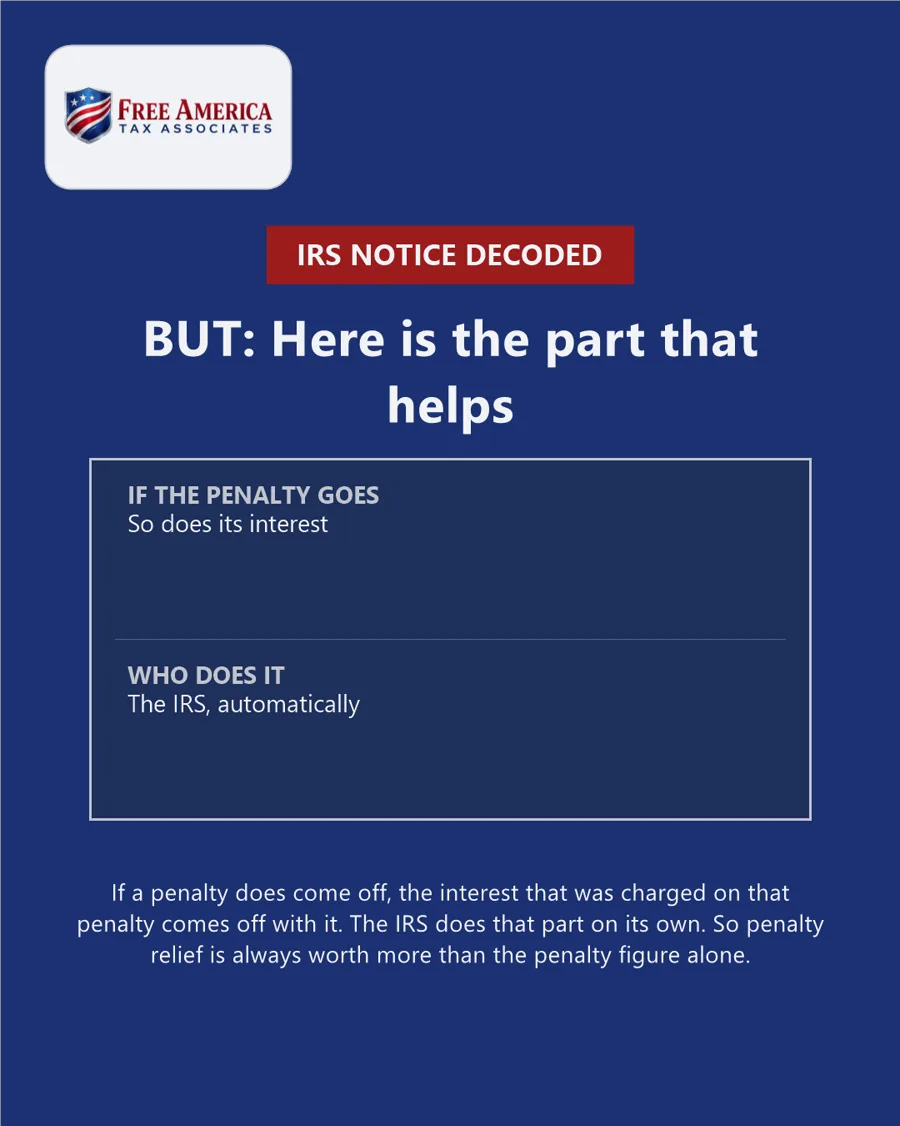
Interest is a different animal. The IRS does not remove it for reasonable cause or as first-time relief, because it is required by statute, and it compounds daily at a rate that is currently 7% on individual underpayments. There is one narrow exception for interest caused by an unreasonable IRS delay on a procedural act. The useful lever is indirect: reduce the tax or the penalties and the related interest comes down with them, which is why penalty relief is worth more than the penalty figure on its own.


Read next: the IRS letter decoder, penalty relief, or installment agreements.
Common Questions
Does a payment plan reduce what I owe?
How long can an IRS payment plan run?
Will the IRS look at my finances?
What happens if I miss a payment?
Can I settle instead of paying in full?
Still not sure where you stand?
Fifteen minutes, no cost, and you leave with your next steps in writing.
Book My Free Call →Or call (855) 473-2829